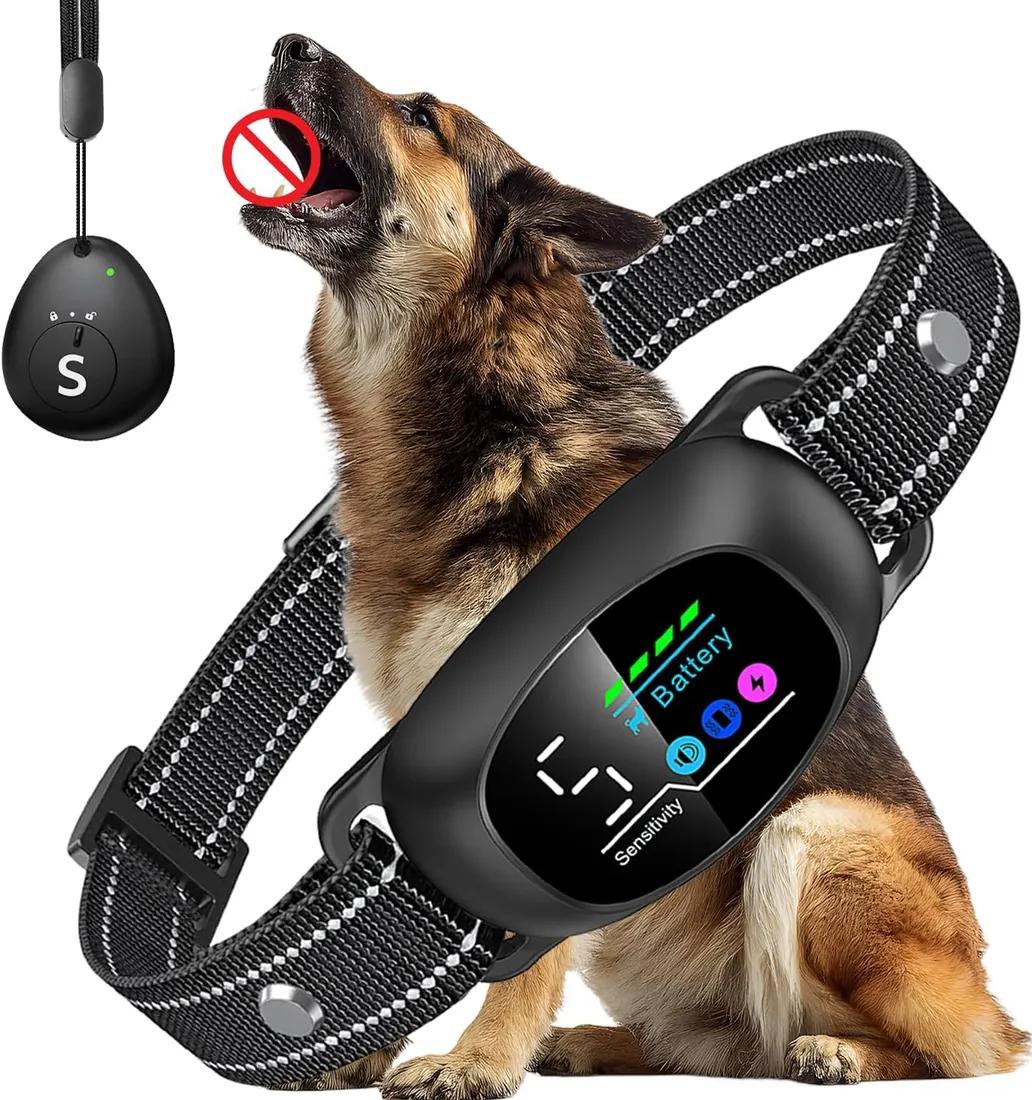
Why it matters
Four automatic modes run from sound alone up to sound, vibration and static, and a remote lets you trigger cues manually. A dual-sensor chip reads bark sound and throat vibration. A backlit display shows mode and battery, and it pauses after six continuous activations. A 300 mAh battery charges by magnetic cable (adapter not included).
Who it's for, and who should skip it
Good fit if
- Manual plus auto
- Budget buyers
- Training sessions
Look elsewhere if
- Dogs barking from fear or separation anxiety
- Puppies under about 6 months
- Unsupervised all-day wear
Pros and cons
Pros
- Remote option
- Display
- Low price
Cons
- Static mode
- No adapter
- Unpublished output
Limitations to weigh
- Find out why your dog barks first: boredom, fear, separation distress and alerting all need different fixes, and a bark collar can make fear or anxiety worse.
- Automatic collars correct every bark they detect, including alarm or distress barks; never leave one on an unsupervised dog for long periods.
- Follow the maker's wear limit (often no more than 8 to 12 hours a day), check the neck daily and move the unit to avoid pressure sores.
- Static modes are aversive; welfare groups advise trying beep and vibration, enrichment and training before any static correction.
Specifications
Every figure below comes from the source shown in brackets. Where the maker doesn't state something, we say so instead of estimating.
| Material | Acrylonitrile Butadiene Styrene, Nylon | Retailer |
|---|---|---|
| Dog size | All Breed Sizes | Retailer |
| Closure | Buckle | Retailer |
Alternatives worth comparing
More bark control we cover
Final verdict
A flexible budget combo.
Where to buy
Our links open this exact model's product page. Prices and stock change; check what's included before you order.
Prices change often; the button shows today's price.
Each button opens this exact model. We may earn a commission on tracked links; it never changes what we publish. Disclosure
Questions buyers ask
Does the Tucnkac collar have a remote?
Yes, for manual cues.
When does it pause?
After six continuous activations.